 Futbols
 Basketbols
 Hokejs

Western parts still found in Russian weapons, Riga sanctions conference hears
At a conference hosted by Latvia's Financial Intelligence Unit on 12 November, Ukraine's sanctions commissioner, the European Court of Auditors and a Kyiv School of Economics expert set out where sanctions on Russia work and where the gaps remain.

Mārtiņš Lasmanis· Editor-in-chief
Prepared by the S Ziņas newsroom·
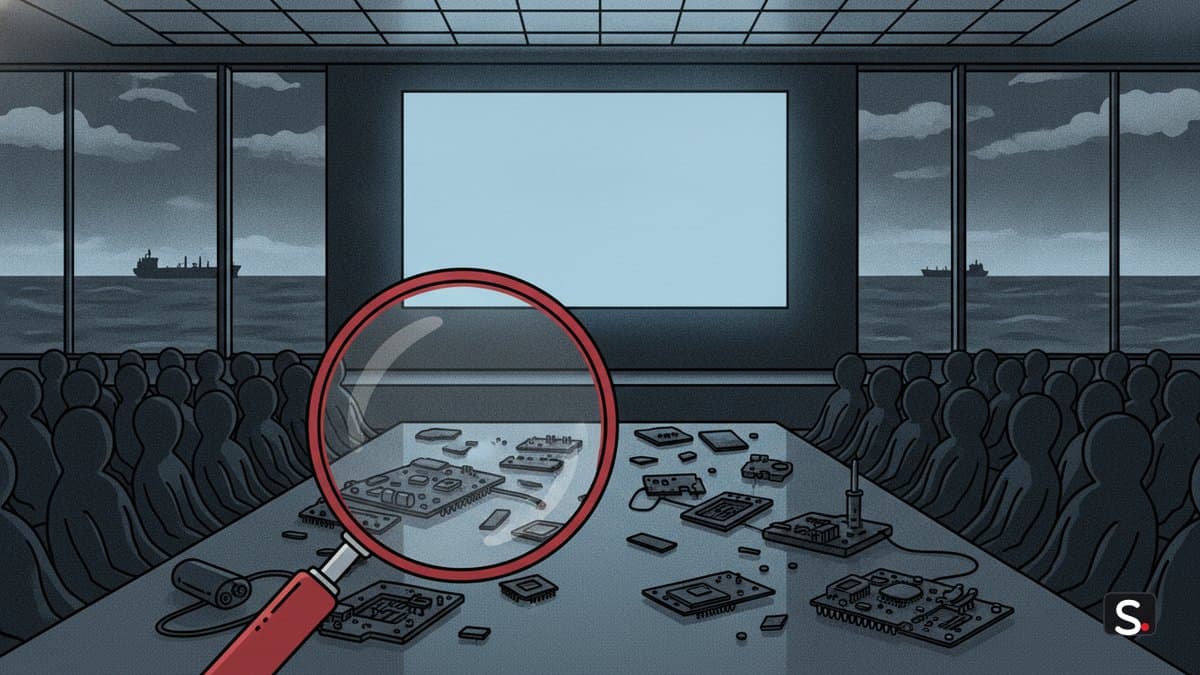
Sanctions on Russia are working, but less well than hoped, and enforcement remains the weak point, speakers said at an international conference in Riga on 12 November. “Sanctions Work: Degrading Russia’s War Machine”, held at the National Library of Latvia, was the eighth annual sanctions conference of FIU Latvia, the country's Financial Intelligence Unit. It was streamed online, and recordings in English and Latvian are available on the FIU's YouTube channel.
Toms Platacis, head of FIU Latvia, opened the conference. He said sanctions were a matter of national security for Latvia, whose eastern border is also an external border of the European Union and NATO. Since 2024 the FIU has been Latvia's central authority for implementing sanctions.
Ukraine: components and the shadow fleet
Vladyslav Vlasiuk, the Ukrainian president's adviser and commissioner for sanctions policy, who joined remotely from Kyiv, said Western-made parts, including recently manufactured microchips, were still being found in Russian missiles and drones. Investigators have recently also found magnetometers, which keep navigation working even when signals are jammed. He proposed a G7 platform for countries to share information on such components.
Vlasiuk said “a good 50%, if not more” of the sanctioned shadow fleet vessels were still operating. He called for sanctions on the vessels' captains and for a full ban on maritime services for Russian oil shipments. He used cruise missiles to illustrate the effect of sanctions: Russia is producing about as many this year as before, but he said it would like to at least double output and cannot.
Auditors: customs act differently
Mihails Kozlovs, a member of the European Court of Auditors, presented the court's report, published this week, on how the EU enforces its trade sanctions on Russia. Its main conclusion is that customs authorities in member states should apply the sanctions more uniformly and that the European Commission should oversee them more closely. The auditors found differing customs checks, different approaches to exemptions and to recognising export licences issued by other member states, and vague terms in the sanctions regulations. Kozlovs said this allows traders to look for the weakest link and get around the sanctions.
The auditors also said member states were late in transposing the EU directive on penalties for breaching sanctions, and the Commission was late in checking it.
Russia overpays but keeps producing
Yuliia Pavytska, head of the Sanctions Hub of Excellence at the Kyiv School of Economics (KSE), said China supplies more than 75% of the critical components Russia needs, either made in China or on behalf of Western companies. According to KSE estimates, Russia pays up to 300% above world prices for such imports from China and about 50% more for imports from other countries. She said every further day of the war was becoming more expensive for Russia, but that did not mean it could not produce new Shahed drones or cruise missiles.
Pavytska called for either abandoning the oil price cap or moving to a ban on maritime services, and for keeping the ban on Russian borrowing on foreign markets. She also said Russia could soon top up its National Wealth Fund, because oil prices had been well above the $59 a barrel assumed in its budget.
Closing the conference, Paulis Iļjenkovs, deputy head of FIU Latvia, said sanctions should be judged not by the number of packages adopted but by how much they hamper Russia's access to technology and money. He welcomed the European Commission's announcement that it is setting up an EU sanctions office.
Read also
Comments
No comments yet. Be the first!