 Futbols
 Basketbols
 Hokejs

Kelp reproduce asexually when no mate is nearby, study finds
Laboratory experiments showed that split-fan kelp from southern Africa can produce offspring without fertilisation, and that both sexes can do it.

Mārtiņš Lasmanis· Editor-in-chief
Prepared by the S Ziņas newsroom·
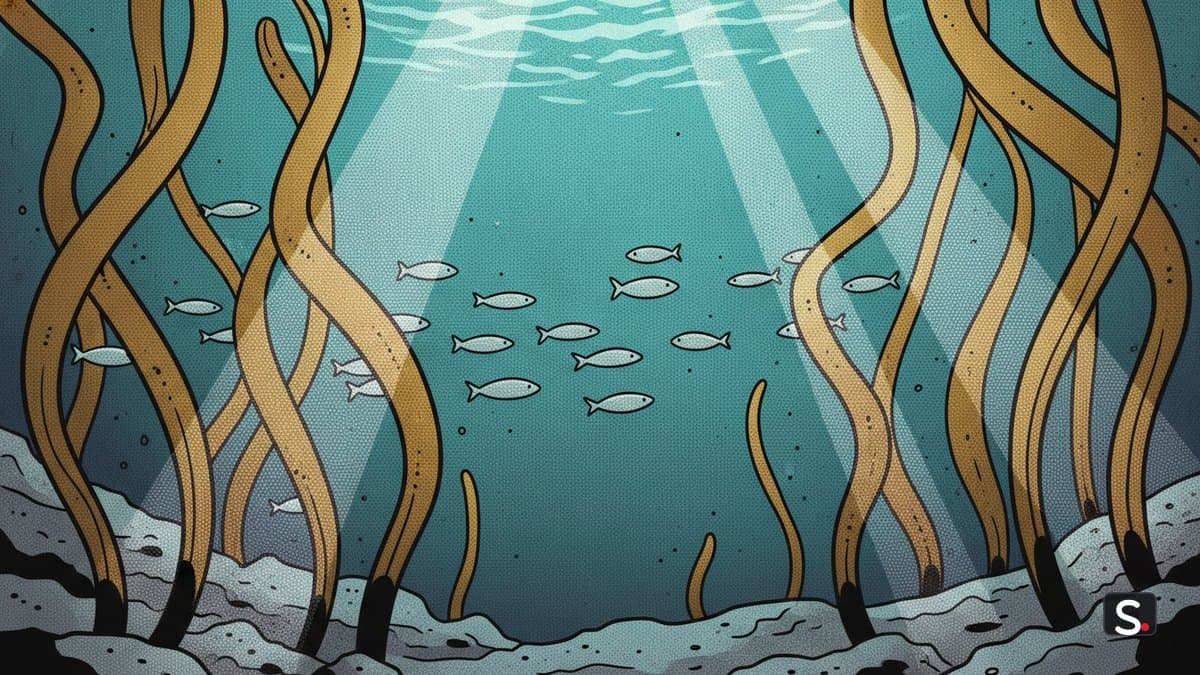
Split-fan kelp (Laminaria pallida), a large brown seaweed that grows along the South Atlantic coast of South Africa and Namibia, can reproduce asexually when there is no mate nearby, according to a study published in the journal PLOS Biology on 12 November.
The study was led by Daniel Liesner of the Max Planck Institute for Biology in Tübingen, Germany, with colleagues from Namibia, South Africa and France. Working with both wild-collected and lab-grown kelp, they found that seaweed of both sexes can reproduce asexually, with new individuals developing from unfertilised sex cells. In cultures containing only one sex, 92% reproduced asexually.
Sensing a mate through the water
In one experiment, male and female kelp were grown in the same dish, separated by a fine mesh. When there was no suitable partner on the other side of the mesh, both sexes were significantly more likely to reproduce asexually. The researchers suggest asexual reproduction may be suppressed by a chemical signal that diffuses through the water and tells the kelp a mate is close.
Genetic analysis showed that during asexual reproduction, gene activity in males became more like that of females. “Our findings show that kelps have much greater flexibility in how they reproduce than previously appreciated. Remarkably, even male gametes can develop into new individuals without fertilisation,” the authors said.
A back-up plan with a cost
The asexual route has drawbacks: it produced fewer offspring, which grew more slowly and more often had developmental abnormalities. In the wild, the scientists collected 523 kelp samples in South Africa and Namibia but found no evidence of asexual reproduction.
The researchers say asexual reproduction may give kelp a back-up strategy in sparsely populated habitats or at times of environmental stress. The findings could help conservationists protect this ecologically important marine species in a changing ocean.
Read also




Comments
No comments yet. Be the first!