 Futbols
 Basketbols
 Hokejs

Leonid meteor shower to peak overnight on 17–18 November
The autumn shower, also known as the “tears of the lion”, is expected to be at its best from Tuesday night into Wednesday. In Latvia the best hours come after midnight, and no telescope is needed.

Mārtiņš Lasmanis· Editor-in-chief
Prepared by the S Ziņas newsroom·
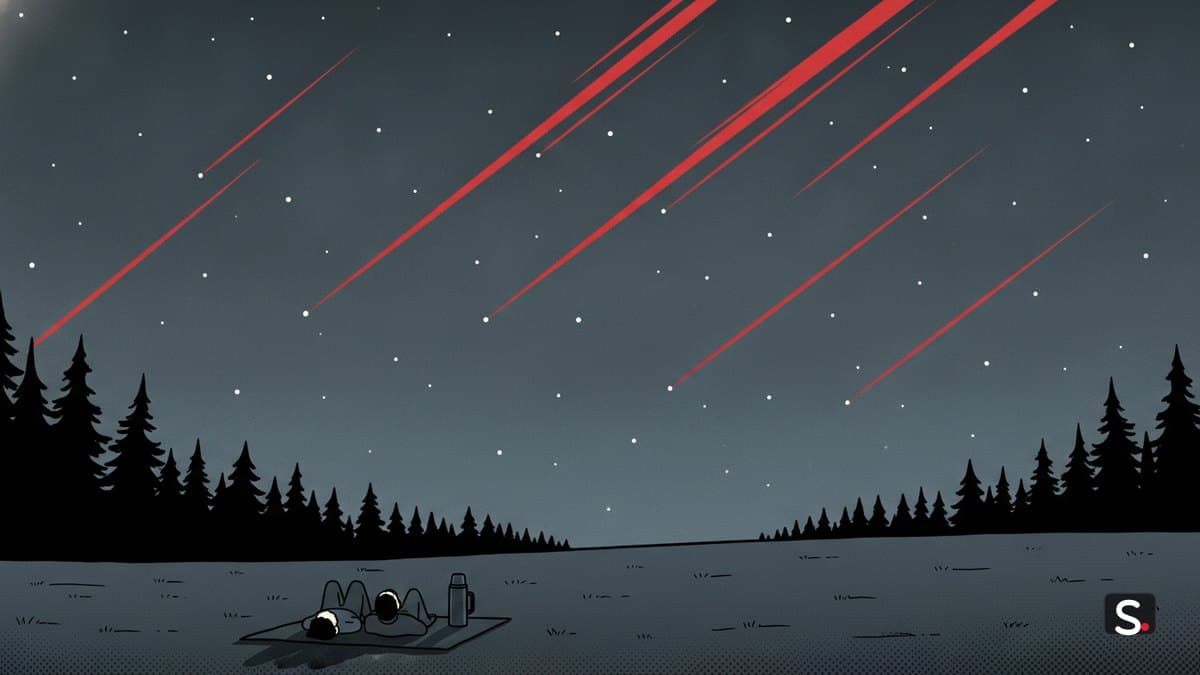
The Leonid meteor shower, active from 6 to 30 November, will peak this year overnight from Tuesday, 17 November, into Wednesday, 18 November. The International Meteor Organization (IMO) forecasts the maximum for 23:45 UTC on 17 November, which is about 01:45 on 18 November in Riga.
The shower is sometimes called the “tears of the lion” because the meteors appear to fly out of the constellation Leo. They are dust particles left behind by comet 55P/Tempel-Tuttle. They hit Earth's atmosphere at about 71 kilometres a second and burn up, leaving bright, fast streaks.
How many meteors to expect
This is not a storm year. Under dark skies, 10 to 15 meteors an hour is a realistic expectation. Sixty years ago, in November 1966, the Leonids produced one of the most famous meteor storms on record, with thousands of meteors an hour, but such outbursts are rare.
The Moon reaches first quarter on 17 November. Its light will hide fainter meteors in the evening, but it sets around midnight, so the best hours are from midnight until dawn, when Leo climbs higher in the eastern sky.
How to watch in Latvia
No telescope or binoculars are needed: meteors appear all over the sky and are best seen with the naked eye. Find a dark spot outside town, away from street lights and with a wide view of the sky, and give your eyes 20 to 30 minutes to adjust. Looking at a phone screen undoes that.
November nights are cold, so bring warm clothes, a blanket or sleeping bag and a flask. It is easiest to lie on your back and look slightly to the side of Leo rather than straight at it. Clear skies matter most, so check the cloud forecast from LVĢMC, Latvia's state weather service, before heading out. If the peak night is cloudy, the Leonids can also be seen on the nights either side, though in smaller numbers.
Read also


Comments
No comments yet. Be the first!