 Futbols
 Basketbols
 Hokejs

Latvia’s wholesale electricity price rose 4% in October, and November has started far higher
The October average was €112.76 per megawatt hour, according to a market review by Latvenergo, the state energy company. Daily prices passed €300 several times in early November.

Mārtiņš Lasmanis· Editor-in-chief
Prepared by the S Ziņas newsroom·
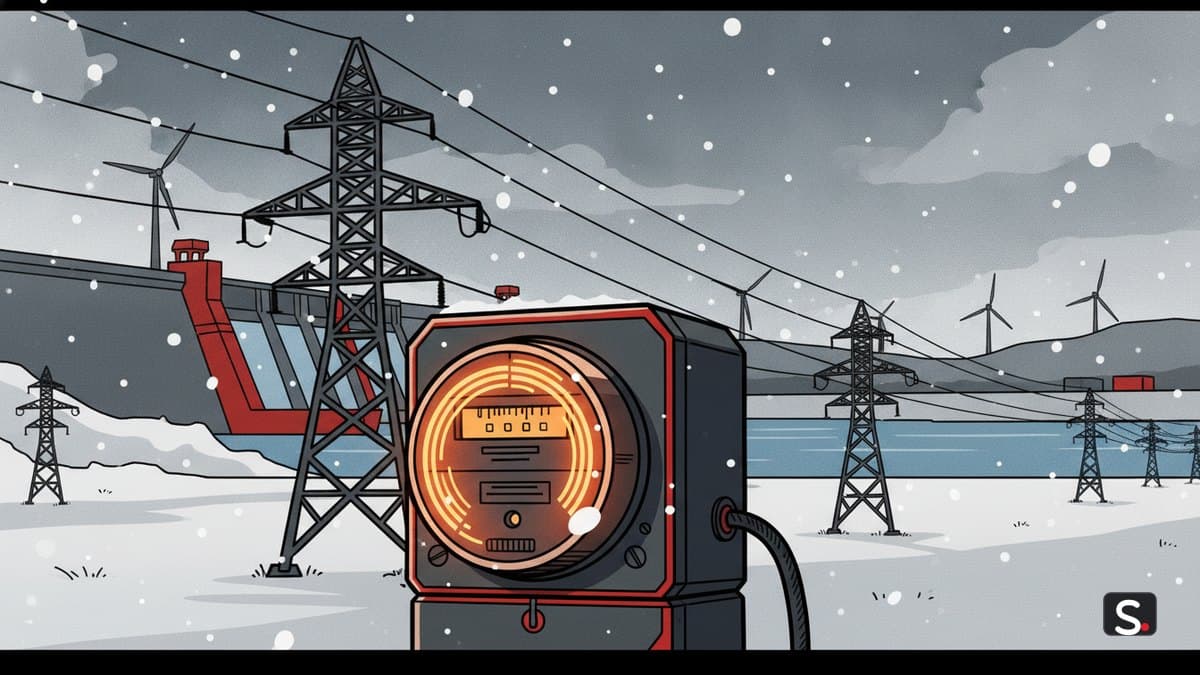
The average price on the Nord Pool power exchange in Latvia rose 4% in October from September to €112.76 per megawatt hour, according to an electricity market review by Latvenergo, the state-owned energy company, published on Thursday, 12 November and prepared by its trading analyst Kristaps Avotiņš. In Lithuania the price rose 5% to €113.58, and in Estonia 10% to €82.19 per megawatt hour.
In October, Baltic prices in 15-minute trading intervals ranged from €0.21 to €409.66 per megawatt hour. The Nord Pool system price, by contrast, fell 8% to €88.06.
Why prices rose
Prices were driven up by seasonally rising demand and a sharp drop in solar output, which halved in the Baltics. Gas-fired and other thermal power plants, which cost more to run, played a bigger role. Wind farms held back a steeper rise: in the Baltics they produced 725 gigawatt hours, the highest monthly figure on record.
Electricity consumption in Latvia rose to 648 gigawatt hours in October, up 11% on September and 9% on a year earlier. Latvenergo’s plants generated 314 gigawatt hours, 58% more than in September, mainly from the hydroelectric stations on the Daugava river. At the end of the month the Nordic hydro reserves were 11.8 terawatt hours below the long-term norm, raising the risk of higher prices in winter, Latvenergo said.
November even higher
November has begun with much higher prices. On Monday, 9 November, the daily average in Latvia reached €414 per megawatt hour, the highest this year, and the average for the first ten days of the month was above €290, LSM, the Latvian public broadcaster, reported. In Estonia the price that day was around €202, because Estonia can import cheaper power from Finland, while the transmission capacity between Estonia and Latvia is not enough to even out prices.
“Each factor may only contribute a few per cent to the price, but when they all push in the same direction, up or down, the price tends to rise or fall very sharply,” Guntis Lūsis, Latvenergo’s director of energy trading, told LSM. Only customers with exchange-price contracts feel the swings; fixed-price customers are not affected, the company said.
Read also



Comments
No comments yet. Be the first!