 Futbols
 Basketbols
 Hokejs

Armed group attacks hamper Ebola response in DR Congo, UN says
Eastern Congo still records 400 to 500 new cases a week, while Médecins Sans Frontières warns that money is not reaching health workers.

Mārtiņš Lasmanis· Editor-in-chief
Prepared by the S Ziņas newsroom·
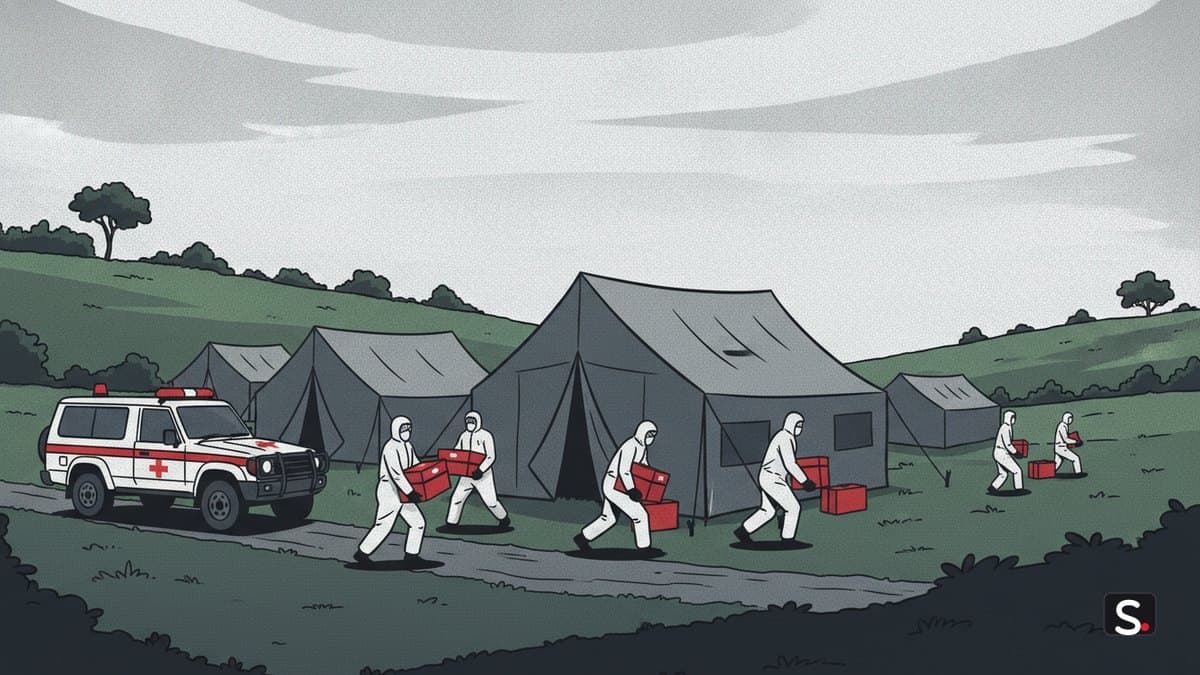
The Ebola outbreak in the east of the Democratic Republic of the Congo is still spreading, and attacks by armed groups on civilians and health workers are making it harder to stop, the United Nations said on Friday, 13 November. The outbreak, declared in May, is the largest in the country’s history, with more than 11,000 confirmed cases and more than 5,000 deaths.
Julien Harneis, the UN’s senior Ebola response coordinator, said fighters from the Allied Democratic Forces (ADF) had killed more people than the disease in recent days. The attacks have hit dozens of villages in the south of Ituri and North Kivu provinces. “People are scared, people are furious at the lack of action on this,” he said.
Cases remain high
Chikwe Ihekweazu, head of the World Health Organization’s emergencies programme, said 400 to 500 new cases were still being found every week as the disease reached rural and hard-to-reach areas. Transmission has fallen sharply in former hotspots, including Bunia, Mongbwalu, Rampara and Nizi.
Earlier this week the WHO condemned an attack in Cantine-Aloya in North Kivu in which 66 civilians, including three health workers, were killed and three health facilities were looted. Before that, a nurse was killed in Tshopo province while responding to a suspected Ebola case.
Where the money goes
In a report, Médecins Sans Frontières (MSF) warned that hundreds of millions of dollars meant for the Ebola response were not reaching the people they were intended for. According to MSF, front-line workers are going unpaid and lack training and equipment, and in some places ambulances have run out of fuel. Two-thirds of deaths are happening in communities rather than in treatment centres, the BBC reported.
In October, the Africa Centres for Disease Control and Prevention (Africa CDC) said $700 million of the $962 million paid out to organisations had not been accounted for. Its head, Jean Kaseya, said at the time that it was too early to call it embezzlement and described it as a failure of financial reporting and transparency.
Read also




Comments
No comments yet. Be the first!