 Futbols
 Basketbols
 Hokejs

SpaceX to try catching both Starship stages for the first time
The launch window for Starship’s 15th test flight from Texas opens at 00:45 Riga time on 14 November. Catching both stages would make it the first flight of a fully reusable system.

Mārtiņš Lasmanis· Editor-in-chief
Prepared by the S Ziņas newsroom·
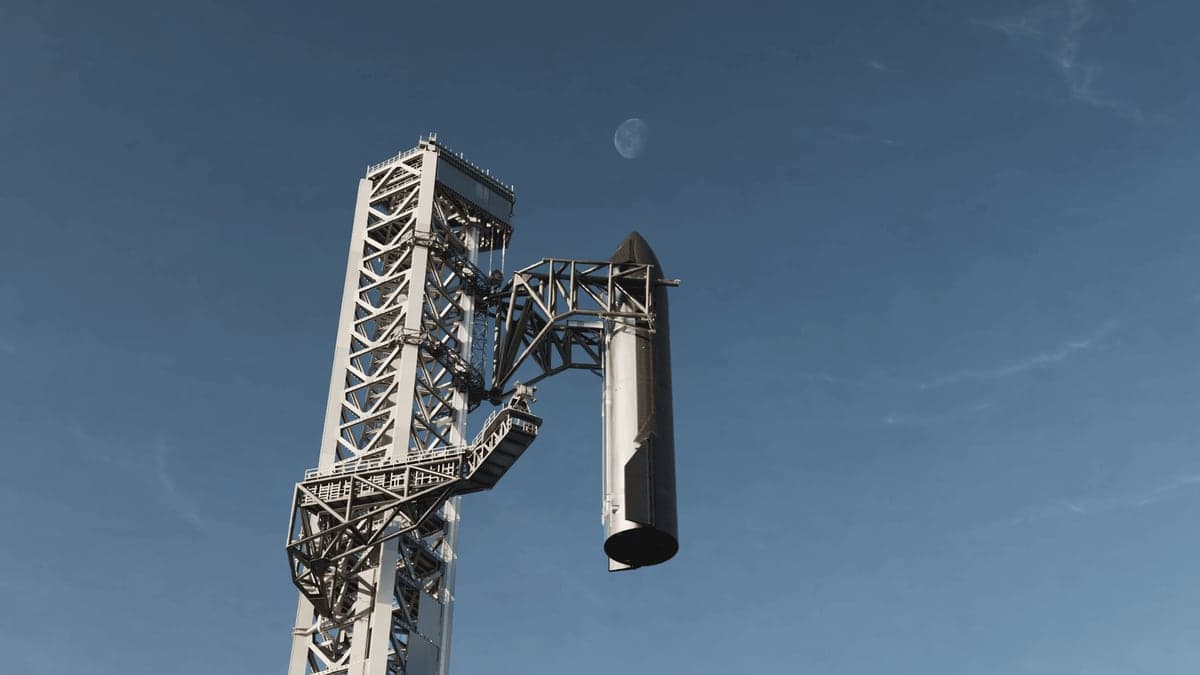
SpaceX plans to launch its largest rocket, Starship, on its 15th test flight from the Starbase site in Texas at 00:45 Riga time on Saturday, 14 November, pending regulatory approval. The launch window lasts 75 minutes. For the first time in the company’s history, both stages — the Super Heavy booster and the Starship upper stage — are meant to fly back to the launch tower and be caught by its mechanical arms.
Why it matters
SpaceX has caught a Super Heavy booster three times so far, but the tower has never caught a ship. The company calls it the first attempt to fully recover an orbital launch system. The ship’s manoeuvres before a catch are harder than the booster’s because it returns from orbit at a much higher speed. According to SpaceX, three first-generation boosters have been caught so far, and two of them have flown again. This will be the first catch attempt for the new, third-generation Super Heavy.
The booster is due to be caught about six and a half minutes after launch. The ship will reach a low orbit of about 275 km, deploy 26 next-generation Starlink V3 internet satellites, complete about 14 orbits and return to Starbase after more than 22 hours for its own catch attempt. SpaceX says the 26 satellites add as much capacity as about ten Falcon 9 launches of the previous-generation Starlink satellites.
A cheap, fully reusable rocket is central to the plans of Elon Musk, the founder of SpaceX: he needs it to expand the Starlink network, for planned data centres in orbit, and for missions to the Moon and Mars.
What could go wrong
The biggest risk is damage to the expensive launch complex if something fails during the final braking and catch. SpaceX has already built a second launch tower at Starbase. If something goes wrong, the booster can come down in the Gulf of Mexico, and the ship can leave orbit early and splash down in the ocean.
The ship will return to Starbase only if the flight control team has confirmed that the systems needed for landing are healthy. On the previous flight, the 14th, on 28 September, the ship reached orbit and deployed satellites for the first time, but SpaceX brought it down early.
SpaceX’s live webcast will start about 30 minutes before launch on the company’s website and on its X account, @SpaceX. The launch time may change.
Main image: an illustration of the ship catch. Image: SpaceX
Read also


Comments
No comments yet. Be the first!